Thursday, February 21, 2008

Duck goes cheap in supermarket


Former PM Jaroslaw ‘the duck’ Kaczynski has said that the unregulated building of hypermarkets and supermarkets is against the social and national interests of Poland. Strange how the arch-conservative Kaczynski would appear hip and radical to many ‘liberals’ in the UK.

Supermarkets for Kaczynski – all of which carry foreign capital – are quintessentially evil. The already draconian building restrictions - the result of a law created last year by the old Kaczynski government – should be retained, he said yesterday at a meeting with trade unionists, trying to preempt any move by the more free market orientated Civic Platform government to allow the building of any more of them.

As he spoke, trade unionists at a branch of Tesco’s in Tychy in the south of the country went on a warning strike, fighting for better pay and conditions.

Liberals in Poland - who quite like supermarkets - would point out that Kaczynski’s opposition to them is merely playing to his political base: small towns which rely on small, local retail and production units, and to his old Solidarity trade union base.

But I would remind liberals in Poland that it is the liberal-left in the UK, for instance, who are calling for similar restrictions to be imposed on supermarkets there.

The Competition Commission is currently drafting up restrictions to supermarket trade in the UK that Kaczynski can only drool at. The big chains will be regulated in how big price cuts they can offer. 'Cheap food?' No thanks. And the support for that kind of invasive law comes with the blessing of the modern day western liberal.

The view behind this is expressed by Andrew Simms, author of Tescopoly: "Tesco is an expression of a winner-take-all dynamic at the heart of the business sector at the moment. Without adequate checks and balances to keep markets open, you end up with the ultimate paradox, flying under the flag of promoting free markets: monopolies."

But that’s not all. “There is the poverty of our 'cloned' commercial surroundings, the poverty of knowing the hardship of the people who fill the supermarket shelves, and overwhelming [spiritual] poverty of actually getting to and shopping in a big supermarket.”

So the morons who shop in supermarkets – he is talking about you and me – are being ‘spiritually’ impoverished every time we park the car in the shopping mall multistory.

What about all the spiritually malnourished people who, like me, think supermarkets are a very useful way to do the shopping? And there are lots of us, because so many people go to Tesco etc.
"It's not necessarily so that just because people use it, it must be a good thing. It doesn't make the environment around it a pleasant place.

Oh. Yeah.

I can imagine Jaroslaw Kaczynski – who the western liberal middle classes would normally look down their noses at (with his anti-gay views, his nationalism) nodding along to much of Tescopoly. Supermarkets - and this is the rub – to both groups represent modernity and mass culture, and neither liberal nor conservative is too keen on modernity at the moment.

I do understand where Kaczynski is coming from: small not very good and expensive retail units are threatened by the evil supermarkets.

Small food producers are threatened by supermarkets – they just can’t produce enough of a good product to satisfy them. These people are Kaczynski’s base and he is expressing their peasant, and what used to be called, ‘petty bourgeois’ point of view...

Yet, much of the western middle class is made up of some very petty bourgeois thinking. What they forget is what I don’t. Being dragged around shops for about an hour everyday...the butcher, baker...by my exhausted mum, doing what are just routine chores. She didn’t have the luxury of a once a week mega shop in Tesco or Carrefour. So supermarkets have helped liberate women’s time. But the majority of people here in Poland simply don't have that choice. They still live how my mum lived today.

And what some of the liberal middle classes in the west have also forgotten is that supermarkets have helped keep the price of food down.

Now that may not matter to them – food has been and still is relatively cheap as a proportion of income in the UK for sometime. But to Poles, who on average still spend a quarter of their income on the basics of life – food, this is a big deal. Small shops do not have the economies of scale to keep prices down.

At a time of food inflation like we are experiencing now, supermarkets are essential.

And if trade unionists get active in them, then that’s fine by me and good luck to them. But you won’t be getting trade unions forming in small, often super-exploitative small businesses.

That someone like Kaczynski can find political common ground with liberals in the west proves that either: Kaczynski is not reactionary at all, but a liberal in disguise; or that many western middle class liberals are not so liberal at all, but reactionaries in disguise?

And put it this way: I don’t think Kaczynski is a cross-dressing liberal...

Monday, February 18, 2008

Daily Mail pays for dodgy stories: Part XXI


It seems the only qualification you need to be a Daily Mail investigative journalist is to have a thick cheque book.

You remember the post we did about how Sue Reid, top Mail investigative sleuth, had been offering money for Poles - and me (which proves how dumb they are) - to go over to the UK and park illegally and speed, just to 'show' how thousands of Eastern Europeans were doing the same and avoiding paying the fines because their vehicle was not registered in the UK?

Well, the Daily Mail never rests in its ethical quest for the truth.

Here is an email doing the rounds from another Mail hack, Diana Appleyard, who is offering money for information on Eastern European law breaking in the UK.

-----Original Message-----
From: rsreply@dwpub.com [mailto:rsreply@dwpub.com]
Sent: 13 February 2008 15:57
To:xxxxxxxxxxxxxxxxxxxxxxxxxxxxxxxxxxxx
Subject: Response Source - Diana Appleyard , Daily Mail (Request for personal case study)
PUBLICATION: Daily Mail (Request for personal case study)
JOURNALIST: Diana Appleyard (staff)
DEADLINE: 14-February-2008 16:00
QUERY: I am urgently looking for anonymous horror stories of people who have employed Eastern European staff, only for them to steal from them, disappear, or have lied about their resident status. We can pay you £100 for taking part, and I promise it will be anonymous, just a quick phone call. Could you email me asap? Many thanks, Diana.

They must be desperate.

Hat tip to the nice person at Five Chinese Crackers for the email alerting me of this. Original source here?

Kosovo – a flag of ‘independence’?


This is one strange flag they have come up with for Kosovo.

That’s because it has had a torturous design process, which encapsulated the process in which they have won ‘independence – under the instructions from the UN and EU.

Condoleezza Rice said today:

"The United States has today formally recognised Kosovo as a sovereign and independent state. We congratulate the peopleof Kosovo on this historic occasion,"

But independence is not what they are going to get.

The design of the flag the newly ‘independent’ state will use was not arrived at in an ‘independent’ way. They put the flag design together as I would follow the instructions putting together a new piece of furniture from IKEA.

Kosovars have won an assemble yourself, ‘flat-pack’ independence

So what they came up with was nothing like the Albanian flag that Kosovars wave at demonstrations,...

...but something very much like the EU itself. It looks like a protectorate of stars over ‘independent’ Kosovo. The EU has started up another EU protector colony. Grim.

Sunday, February 17, 2008

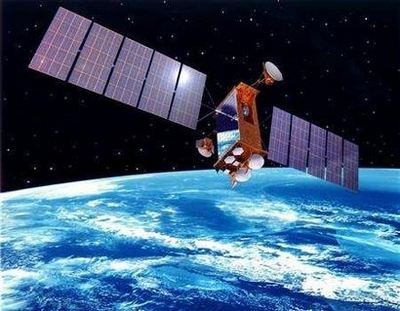
Is Poland in danger from exploding US spy satellite?


The Polish ministry of defense has gathered a special task force together after George W. Bush ordered a crippled US spy satellite be shot down. The resulting toxic fumes will rain down on central Poland. Are Poles in danger? Hmm...

The TVN Fakt news program, which ran the story first item on Friday evening, said the resulting fumes from the fuel onboard could be a threat to our health! So the government is getting organized - just in case.

A satellite launched in 2006 by the US immediately mis-functioned and has been staggering around in a wobbly orbit ever since.

The Whitehouse finally ordered it be shot down sometime next week, so worried are they, apparently, that the lemon satellite will have an ‘unpredictable re-entry’ next month and come crashing down on someone’s house, or head, and unleash kiloliters of the dangerous, ‘highly toxic’ rocket fuel hydrazine.

Blimey! Worse – experts in this type of thing have worked out that after the US zaps the satellite the resulting vapor trail of scary hydrazine will be sprayed over an area covering central Poland.

Don’t p..p..panic!

So how lethal is hydrazine? The Theoretical and Physical Chemistry Lab says on its web site that it is “Harmful if inhaled or swallowed.” Wikipedia, via the Technology Transfer Network Air Toxics Web Site (for it is they) says:

Individuals may be exposed to hydrazine in the workplace or to small amounts in tobacco smoke. Symptoms of acute (short-term) exposure to high levels of hydrazine may include irritation of the eyes, nose, and throat, dizziness, headache, nausea, pulmonary edema, seizures, and coma in humans. Acute exposure can also damage the liver, kidneys, and central nervous system in humans. The liquid is corrosive and may produce dermatitis from skin contact in humans and animals. Effects to the lungs, liver, spleen, and thyroid have been reported in animals chronically (long-term) exposed to hydrazine via inhalation. Increased incidences of lung, nasal cavity, and liver tumors have been observed in rodents exposed to hydrazine. EPA has classified hydrazine as a Group B2, probable human carcinogen.

Crumbs! That’s scary!

But wait a minute. The US government's Air Toxics Index notes that:

Accidental discharge into water, air, and soil may occur during storage, handling, transport, and improper waste disposal. However, hydrazine rapidly degrades in the environment and is rarely encountered.

“Rapidly degrades...”? And the World Health Organization says:

Hydrazine is degraded rapidly in the air, through reactions with ozone, hydroxyl radicals, or nitrogen dioxide. In polluted air, the life-time will be approximately 1 hour.

Rapidly degrades? In one hour?

So if the US blows up the satellite as planned at 250 kilometers above the Earth’s surface, the resulting vapor is going to be extremely dispersed and ‘rapidly degrades’ anyway. By the time any of it gets down to Earth it won’t be any danger to anyone - except, maybe, a very small beetle, with an asthma complaint and nervous rash.

So why exactly has the Polish defense ministry got together an emergency task force to plan for the end of Poland as we know her on March 16?

And why, for that matter, is the Bush administration ordering shot down the old banger of a satellite in the first place?

The Whitehouse has been ‘shocked’ that many are saying the orbiter is not really any danger to anyone, and that the Pentagon is simply doing what the Chinese did last year when they tested out a missile system especially designed to shoot down spy satellites.

“But it’s a health and safety issue,” the Pentagon bleats, lamely. But few believe them. Few believe anything the Whitehouse says anymore, somewhat wisely.

And the ‘emergency task force’ scrambled together by the Tusk government? Another sign, if we needed it – which we most certainly don’t – that maybe they have too much idle time on their hands.

Wednesday, February 13, 2008

Polish immigration causes Icelander xenophobia?


A 14 year old boy has set up an anti-Polish web site in Reykjavik. The newspaper Rzeczpospolita says that xenophobia is on the rise in Iceland due to an influx of Poles in the last few years. But have Poles unleashed a chilly tsunami of Icelandic racism? Have Icelanders blown their collective geyser? The beatroot investigates.

In three days the embryonic Icelandic race warrior gained 700 teenage members on his forum, calling for Poles to ‘get out’. And much worse.

It got so bad, says the newspaper, that the police were brought in to investigate.

“A xenophobic mood is on the rise in Iceland. The number of immigrants is skyrocketing, which makes native inhabitants uneasy and confused,” says Einar Skulason, of the Intercultural Centre in Reykjavik.

Uneasy, confused, racist Icelanders on the march! Eek!

In January 2008, claims wikpedia, Iceland had a population of just 313.736. Not really very many Icelanders, are there? But 12,000 Poles have migrated in - which, as a proportion of not a lot, is quite a lot. And maybe Iceland is rather large for a population so small, but most Icelanders live in the capital (it’s probably warmer to stay close) so Poles are perhaps fighting for a small space, for a small amount of jobs, and for a small amount of light hours.

Or maybe not.

An Icelandic source has contacted me – rootlets spread everywhere – saying that the Rzeczpospolita story is out of date. The anti-Polish ‘association’ that the kid founded is no more, after feeling the full force of Icelandic censorship. Icelanders, you see, are sensitive, Scandinavian types, who would not be so crude to rise, en mass, to xenophobic temptation.

The source says that there is no more negative feeling against Poles than there is in ‘any other country.’ I believe him.

And a well-known Icelandic pop star, popular with the kids, has organized a concert to ‘fight against racism and xenophobia’. Good.

The singer has - oddly in my opinion - ‘[...] challenged the prime minister of Iceland, who is half-Norwegian, to sing a song in support of anti-racism’[!].

That’s a brilliant way to protest. Ask the prime minister to sing!

I know a journalist who once asked Polish prime minister Donald Tusk to say something in English about his Kashub roots. He refused. But he did, endearingly, sing him a song in Kashubian! Which was nice.

But other postulates could be made by a new political movement demanding elected leaders belt out a tune. Bush should be made to sing ‘Yellow Rose of Texas’ while dressed up as Dolly Parton. Putin could sing 'These Boots are Made for Walking....'

And ex-PM Jaroslaw Kaczynski could be asked to repeat his barn storming performance of the Polish national anthem, where he demonstrates that he has clearly no future in the music business.

The fact that there are anti-racist movements appearing in Iceland does tend to suggest that there are racist sentiments there. Which is sad. Icelanders are one of the most inoffensive people in the world. I can’t imagine Bjork in jackboots. On the other hand...

Tuesday, February 12, 2008

Poles plump for Clinton


An opinion poll published in the Dziennik newspaper reveals what the beatroot was mulling over a couple of weeks ago – who would Poles vote for in the US general election in November?

Forty eight percent said they would vote for Hilary Clinton, and that’s 11 percent more than her rival Barak Obama.

I imagine this is down to maybe a couple of factors: firstly, recognition. Poles remember Bill – ‘I did not have sex with that women’ – Clinton. So Hilary is a known quantity. And the second reason I will leave to your imagination.

Poor old Republican nominee-in-waiting John MaCain doesn’t seem to have much support at all in Poland. If the presidential race was between Clinton and MaCain then 64 percent of Poles would vote Democrat and just 20 percent Republican. If Obama was the candidate, then Poles would still vote Democrat but by the smaller margin of 52 to 36 percent.

So Poles are Democrats, interestingly, and they are rooting for Hilary.

Monday, February 11, 2008

Who is the most popular Polish prime minister – ever?


Asked by Pentor opinion pollsters who they think was, or is, the best prime minister of Poland post-1989, one in three Poles say… Kazimierz Marcinkiewicz!

As he was only in the top job for the nine months between October 2005 to July 2006, it didn’t give him a lot of time to make many mistakes, I suppose. This was during the time when Jaroslaw Kaczynski – the real leader of the government - said that Poles would not accept having twins both in the prime minister’s job and in the presidential palace. And then they got rid of Marcinkiewicz and Poles got just that.

Polish voters didn’t accept Poland run by twins and booted Jaroslaw out at the first opportunity. Only 7 percent think that J. Kaczynski was the best PM since the demise of communism.

Donald Tusk gets a remarkably high 10 percent rating, but I wonder what these people think he has done? Maybe, like Marcinkiewicz, the less you do the more popular you become.

But who is the least popular PM since 1989? Well, it’s a dead heat for last. One is Józef Oleksy. The other is the current deputy PM, Waldemar Pawlak. Both only get a miserable 1.4 percent support.

In Pawlak’s case, this conforms with the beatroot’s rule that a prime minister’s activity and longevity are negatively correlated with popularity. Pawlak - so bereft of personality and verve is he, that even his friends refer to him as the ‘Cyborg’ - has been prime minister not once, but twice.

Thursday, February 07, 2008

From Russia with love?


Prime Minister Donald Tusk makes his first visit to Russia, Friday. Whatever happens when he gets to Moscow, he is going to take some flak at home, and maybe abroad.

Ex-Prime Minister Jaroslaw Kaczynski always said that he would go to Moscow after, ‘Putin comes to Warsaw.’

It didn’t happen.

Since the October election, Tusk has been to see Chancellor Merkel, he has been at the Lisbon summit to discuss the EU Constitution (oops, sorry, I meant ‘Reform’) Treaty. In March he is going to see George W. Bush. But a little chat with Putin comes first.

The decision to prioritize warming up the, up until now, Siberian temperatures that characterized the Kaczynski government’s relations with Russia has prompted a snow storm of criticism from the... Kaczynski brothers.

“Sell out!” They shout. President Kaczinski is particularly incensed that Tusk is taking unilateral decisions about foreign policy. “Isn’t the government constitutionally obliged to consult the president?”

“If you appear weak before the bear, then the bear will eat you alive...agggghhhhgurgle...burp,” etc.

What’s worse, Tusk decided to go and see Putin in Moscow before he sees Yushchenko and Tymoshenko in Kiev. “But Ukrainians are our friends..,” the Kaczynskis skweem.

But Tusk has never hid his desire to calm down diplomatic relations between Warsaw and Moscow. The row over the gas pipeline between Russia and western Europe, by-passing Poland; the row over Moscow’s ban on Polish meat imports; the row over the anti-missile shield being placed in Poland; the row over allowing a NATO base in Poland. There have been more rows between Warsaw and Moscow in the last two years than there have been between Tom and Jerry. And some of those rows had the same cartoon quality about them.

Tusk has not helped himself with his desire to want to please everyone, all the time. To say the Polish government has been sending mixed signals of late would be to understate an understatement.

Take NATO: when foreign minister, the Atlanticist Radek Sikorski, was in Washington last week he signaled Poland’s willingness to have a NATO base in Poland. Or did he?

Putin is outraged by this, as the Russian government think that Poland should be sensitive to having too many of the US’s power vehicles parked right outside their front door. Maybe they still see Poland as a ‘buffer’ against the West, just as they used to during Soviet times.

And then PM Tusk goes and confuses matters this week by saying that Poland never had any plans to have the NATO base on its soil, in the first place. Er...? Um...

This followed a December meeting between the Polish government and NATO which indicated that having a radar base in Powidz, western Poland, was very much on the cards. Since then the two sides failed to agree on the sharing of costs – meaning, how much Warsaw will have to cough up.

All very confusing. Tusk is trying to look (at two different directions at once) more independant from both Moscow and Washington than he really is, or ever can be.

And then there is that anti-missile shield unpleasantness. During the election Tusk was keen to show that, like the electorate, he was for getting troops out of Iraq, but against a blank check for the US to place ten interceptor rockets in northern Poland.

In Washington, Radek Sikorski was clear that ‘in principle’ they are for having the missile shield in Poland. On condition. The negotiations will continue to be of a ‘marathon’ length.

But is Tusk tough enough to get enough from Bush in return?

Bush versus Tusk? No contest.

In this context, Donald goes to Moscow to see the Man himself. What can Tusk get from this that will make him look good? It’s a tricky one.

It would be very easy for Putin, playing to his adoring gallery at home, to make Tusk look like the weed he gives the appearance of being. Putin is practiced in looking tough, but also making alternative suggestions, in very reasonable language, of how Russia should be consulted on absolutely everything Poland, and everyone else, does. Always. Tusk says he wants ‘open discussions,’ but how open will he leave himself?

So what can Tusk do? Act tough, and get nowhere – or act weak and look like...well, Donald Tusk?

Monday, February 04, 2008

Katyn – it was the Nazis what done it!


A strange thing is happening at Wikipedia. Or perhaps it is not so strange.

I just went on the site to get some copyright free photographs for something I was doing, when I noticed that the first sentence of the entry about the Katyn massacres read:

The Katyn massacre, also the Katyn Forest massacre (Polish: zbrodnia katyńska, 'Katyń crime'), was a mass execution of Polish citizens ordered by Nazi authorities in 1940.

By the Nazi authorities? Maybe it was just a typo? Strange, especially as the rest of the article goes on about how the Soviets were responsible.

Even stranger – I went down stairs to get some wine, and when I came back the wiki article had changed:

The Katyn massacre, also the Katyn Forest massacre (Polish: zbrodnia katyńska, 'Katyń crime'), was a mass execution of Polish citizens ordered by Soviet authorities in 1940.

The word ‘Nazi’ had changed to ‘Soviet’ in the ten minutes it took to go and get a bottle of merlot.

How fluid history has become since the advent of wikipedia type sites, when anyone can get in and screw around with what someone else had written.

See here which word wiki is using at the time of you reading this.

But who could be screwing around with the Katyn entry? Well, it might be Russian ‘historian’ Aleksandr Shirokorad. Thenews.pl reports:

The Russian Niezawisimaja Gazieta daily claims that the Soviet NKVD secret police could not possibly have been responsible for the mass murder of over 20,000 Polish officers in 1940. The author of the article Aleksandr Szirokorad claims that the massacre could not have been the doing of the NKVD since the ropes used for tying the victims' wrists, and the bullets used to kill them, were not those used by the NKVD. He also claims that the shooting technique used was apparently alien to the NKVD.

Contrary to most historical opinion, the murders, claims Szirokorad, must have been the work of the Nazis [that old chestnut raises its ugly head once more, to mix metaphors].

There has already been a series of four articles in the Russian press questioning the truth about Katyn recently, the last one being inspired by the Oscar nomination for Andrzej Wajda's film Katyn. Moscow has refused to define the murders in Russia and Ukraine as ‘genocide’ or regard them as war crimes.

I meet quite a few Russians when I go to Egypt for holidays in the winter. Nice, intelligent people, some of them. But many seem to be psychologically unable to come to terms with their Stalinist past. The real low point for them was during the Yeltsin years, when the country was being humiliated by a bandit capitalist economy and a leader who was often very, very drunk.

The only good thing they have to say about poor old Yeltsin was that he appointed Putin to be his successor.

I also got the impression that they think that Yeltsin, in some ways, and to some of the more nationalist, was a worse leader than even Joe Stalin. OK, Stalin was a bad man, but he didn’t humiliate them like The Drunk.

I wonder how many Russian members of the Academy of Motion Picture Arts and Sciences there are? If there are any, I suppose they won’t be voting for Wajda’s movie about Katyn, a massacre in which some of his family died.

But I don’t think Wajda is going to need their help, as New York Times readers are putting the film as (87% at the time I looked last) favourite to win Best Foreign Film Oscar.

Vote here yourself and annoy a Russian 'historian'.

Sunday, February 03, 2008

Poland’s Frankenstein GM crop law in the dock


Poland is being taken to the European Court of Justice after it banned GM crops, against the wishes of Brussels.

It was the previous, Law and Justice, government under Jaroslaw Kaczynski which pushed through the Seed Act in May 2006. A Feed Act followed which banned the use of GM in animal fodder.

Not really surprising that the Kaczynski government did that. Much of their support comes from small farms that feel threatened not just by new technological improvements in farming, but of the 21st century in general (and a few other previous centuries, too).

The new Tusk government has said it will maintain the ban - for them it is a 'moral issue' - though some relaxation of parts of the law, on animal feed, for example, maybe possible.

But, at the same time, the government wants to get away from all the Brussels bating that Kaczynski’s government used as sport. No more loggerheads with Brussels, Strasburg, Luxemburg...or wherever it is. But, already, it's back to loggerheads. Problem.

Unlike the last eco-conflict over the Rospuda Valley motorway, environmentalists are rushing to defend the previous, conservative Kaczynski government’s law.

Sir Julian Rose, president of the International Coalition to Protect the Polish Countryside implored the Tusk government not to cave in to the European Commission or the Court of Justice. Polish Radio.

'Don't give up because Poland is a treasure trove of high quality food and the most bio-diverse countryside setting in Europe. It could be the bread basket of Europe for organic and natural foods of the future. This would be the worst moment to suddenly decide that you are going to give in to the corporate lobby and to the European Commission's attempts to force genetically modified food on the public.'
What Rose appears to be arguing for is for Poland to give over its agricultural sector to low yielding organic crops that would increase, drastically, the price of food – at a time when the prices are already soaring, due to the shortage of supply of land.

Organizing your farming sector around growing organics is simply not a viable option, apart from giving over a small amount of land to satisfy middle classes prejudice in the UK and elsewhere.

Termed an ‘independent expert’ in the PR report, someone called Piotr Połanecki, claims that the introduction of GMO would mean changing Poland's farming sector into an ‘industrialized’ monster (something, of course, the communists never really managed to do in Poland).

'The seed regulation and animal feed regulations are very good. Once we introduce them to our environment, GMO plants will contaminate our country and it will be very difficult to enter ecological food markets’.
It works the other way, too. Bans and propaganda against GM has persuaded some African nations to abandon or resist the introduction of crops that would be a great help to them – crops resistant to certain types of diseases, so removing the need to use pestersides; high yield crops so enabling increased production from the same amount of land. But African countries are scared that if they start growing these crops then nobody in Europe might want to buy them.

Are these environmentalists crazy?

Another activist from the Coalition to Save the Polish Countryside thinks not. But Jadwiga Łopata warns, spookily:

‘It is not true that only crazy ecologists are fighting against GMO. In the Coalition we have now hundreds of organizations and VIPs, business and private people and every day someone is joining. So I believe that finally we'll start some debate about GMO and there will be a chance for Polish people to hear what we are facing and how big threats follow from introducing GMO on our table and in our fields. Bog threats’ coming to our ‘table and fields’? She means that GM will destroy the environment and be a threat to our health?

But what threat? Where is it proved that there are dangers to ‘our health’? There simply isn’t any. ‘The science’ – which environmentalists produce when they want to justify authoritarian measures to cut ‘global warming’ – is much more unified on the GM issue than it is about climate change.

The International Council for Science (ICSU), after a review of 50 different research projects concluded: "Currently available genetically modified foods are safe to eat."

A 2003 position paper by the Society of Toxicology found, "The level of safety of current BD [biotechnology-derived] foods to consumers appears to be equivalent to that of traditional foods."

And so it goes on

And what of Americans? They have been eating GM crops for years, and apart from a propensity to vote for governments that seem to think that you can sort the world out by bombing it, they are showing no real ill effects at all.

Only two to three percent of Poles are ‘aware of the issues’ around GMO. I get the impression that some of the people campaigning on ‘the issues’ haven’t got a hang of the facts, either.

But maybe this isn’t about ‘evidence’ or ‘the science’ at all. This is cultural. If you told people at a dinner party in Notting Hill, or even in small town Poland, something had a risk rate of ‘one in a billion’, their reaction would be immediate: “One in a billion! One! You see – there is a risk!”

The unholy alliance of liberals and conservatives in the face of technological progress continues.

Thursday, January 31, 2008

Wojtek the bear – Polish war hero


He served, with distinction, in the Middle East, North Africa and Italy. He helped the Poles to victory at Monte Cassino. He shared beer and cigarettes with the lads (and a few lasses).

And now he is going to get his own memorial in Scotland and someone has written a biography. Blockbuster movie, anyone?

Wojtek was born in 1943 in what was then Persia, where a local boy sold him to the Polish 22nd. Artillery Supply Company. He was officially enlisted and travelled with them west, finishing up at the 1944 Battle of Monte Cassino in Italy.

Wojtek had arrived at his finest hour, carrying ammunition, motors and other things that go ‘’bang’, to the front lines. The Battle of Monte Cassino was and is a big deal in Poland – finally a victory by Polish troops against the Nazis.

My dad, then a very young man, was also at the Battle of Monte Cassino, though he didn’t ever tell me about a bear. (He also never mentioned any Poles at Monte Casino. When I told him a few years ago about how proud Poles were of this victory, he was surprised to hear that they were actually there. Which just shows, that in the fog of war, the last to know what the hell is going on are the soldiers in the thick of it. Maybe a good argument against embedding journalists with front line troops?)

At the end of the war, Wojtek was stationed in Berwickshire in Scotland. He was demobed in 1947 and spent a happy retirement at Edinburgh Zoo, and lived to the ripe old age (despite a modest alcohol and tobacco problem) of 22 years old.

A group of campaigners, led by Aileen Orr (well, maybe they got bored with British politics, which is quite understandable) have proposed a memorial to the soldier bear to be erected in one of Edinburgh’s parks.

But this won’t be the first to be erected to the only bear with a smokers cough to have lugged motors for the Polish army. Local high school teacher and historian, Garry Paulin, has written Wojtek’s biography aimed at the kids market – The Soldier Bear. He told the Berwickshire News:

"Since his death there have been statues put up in his honour in London and in Ottawa, Canada."

And perhaps Wojtek can become the symbol of the new Polish immigrant who has flocked and frolicked to Scotland’s bonny lowlands in the last few years. He is just like them. Nice, friendly type, who likes a drink and a smoke.

There is a nice site about Wojtek here. And Garry Paulin’s site is here.


Read on:
Patryk emailed to ask me to remind you about this site dedicated to the bear.

Monday, January 28, 2008

Poland’s winter of discontent


“Civic Platform are clueless.” That’s what many are saying of Poland’s still fledgling government. It must be the shortest political honeymoon in history.

Usually, governments get elected, the majority are relieved to see the back of the old government, and a period of optimism and popularity ensues for the new leaders.

In the UK, Tony Blair and New Labour had, post-1997, a honeymoon that seemed to go on for years. In fact, it went on until after the next election, which they won, too. And then the honeymoon just kept on going. Until, that is, Tony went and spoiled it all by doing something stupid: he invaded Iraq, alongside his buddy, George.

Oops! Honeymoon ends in tears.

After Civic Platform won the October 21 election, the honeymoon seemed to be going to plan. Opinion polls put their approval rating over 50 percent; people were genuinely relieved not to have to wake up in the morning and read the headlines full of Roman Giertych, Andrzej Lepper or Jarolsaw Kaczynski making a fool of themselves, or Poland, or both.

But the approval ratings for Civic Platform are already on the decline. Some members of Platform’s coalition partners – the ever opportunistic Polish Peasant’s Party (PSL) - are muttering, off the record, their discontent.

When Tusk wakes up in the morning he will not be hearing the birds in the trees singing their welcoming morning chorus; all he will be hearing are people on the march demanding more of…well, pretty much everything, actually.

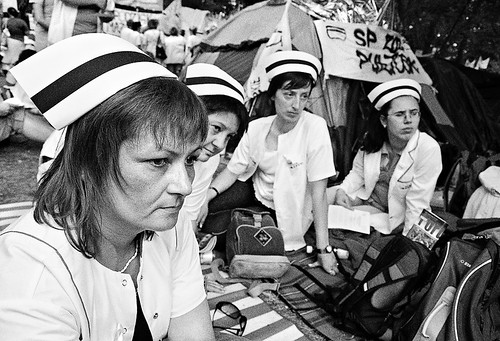
Organized, and not so organized, labour, are having a go and trying to get as much out of the government before they have time to settle. Miners, hospital workers, teachers, customs officials…the list is endless.

Not all of this is Civic Platform’s fault. They have a budget, and deficit, that was drawn up by the previous government.

They have chaos on the eastern border, with HGVs queuing for miles and miles, and days and days, on the Ukrainian and Belarusian side after Poland joined the Schengen fortress. Jaroslaw Kaczynski was claiming that Poland was ‘ready’ to enter Schengen as early as last summer. Well, plainly Poland was not ready. The new restrictions on Ukrainians, Belarusians, Russians entering the country - through already tough and inefficient borders - has created the increased delays and customs officials can’t cope with the extra bureaucracy. Naturally, they want more money for the work, and they want more staff to help them.

Though not their fault, the government, characteristically, seems ill prepared for what would happen after the election.

They created an expectation that here would be a government that would be competent – not like that Kaczynski farce – they would be decisive, resolute, purposeful, determined, strong, unifying.

Well, I just don’t see any of those qualities. None at all. All I see is dither, dither, dither. How long before the Polish Peasant’s Party start to distance themselves from the mess piling up before Tusk’s incredulous eyes?

Honeymoon? It wasn't even a day trip.

Tuesday, January 22, 2008

Polish health service needs the kiss of life


Or something even more intimate. The Polish government have decided to have a ‘White Summit’ where government, president, medical profession and unions all get round a table and talk about stuff.

The health service is short of doctors, who, like nurses, earn a pittance. Strikes and threats of strikes are the norm. Some of the often crumbling hospitals are a health risk to anyone unlucky enough to be sick in one of them. The sector needs some radical surgery and intensive care. The government may have to administer some bitter pills (and other pharmaceutical metaphors). It needs the kiss of life, but all the health service gets is a talking shop and another opportunity for Tusk and President Kaczynski to get at each other’s throats. It’s another case of this government looking like it really hasn’t a clue what to do. So better set up a commission, a round table, a summit. I think they are just passing the buck.

Personally, I go private

Usually. Today, however, I had to go to the state works doctor to get a sick note and medicine for my chest infection. When I turned up and said to the nurse, whose head appeared through a square hole in the middle of a wall, that I needed to be seen, the doctor – a miserable, toad-like individual – initially didn’t want to see me. I think I was keeping him from his private clinic duty – the only way a doctor can stay in the profession is to do private work.

“But I have a contract with this organization, I pay social insurance and I am sick. I want to see a doctor. Oh, and I want some antibiotics, too.”

I always self diagnose. It seems to annoy doctors – which is fun.

Grudgingly, he relented: “Get his card and tell him to wait,” I heard him tell nursey.

So I waited. And then, I waited a bit more. I read some of the drug company flyers hanging around the place. And then I did some more waiting. I paced around the little waiting room, all the while waiting some more. I went outside the waiting room and down the corridor - but even there, I was still waiting.

I went back to the hole in the wall, just to give me something to do while I waited. The nurse hadn’t even bothered to get my ‘card’ yet.

“Can I have my card”?

No I couldn’t, because I didn’t have a card, because I had never been to see the doctor there before.

“And you can’t see the doctor without a card.”

“So could we…make a card?”

She got out a card. “Pesel?” It's a number and I don't actually know it.

“If you don’t have a number then you can’t have a card. And if you don’t have a card then you can’t see the doctor,” she said triumphantly.

I completely lost my temper - I am sick, after all - and ripped up the half filled out ‘card’ (very dramatically) and stormed out the door.

What have you gotta do in this place to get to see a doctor? So I went private.

In the LIM clinic in the centre of Warsaw, about seven rather nicely dressed receptionists are waiting to help with every need, as long as it is medical. They fill out the cards for you as if they were honoured to have the opportunity. They smile and talk about the weather. They then assign you a doctor. They give you a clinic number and say: “Room 9 and that will be 80 zloty, please.”

I waited outside No.9 for five minutes, sitting next to a man whose heal on his foot appeared to be pointing forwards, with his toes pointing backwards. Nasty. And then the doctor called me in.

She was nice but did what all Polish doctors do. They diagnose you, and then they write out a list of medicines and supplements as long as the Magna Carta. And the cost of the anti-biotics (yup, I got them) plus nose decongestant, chest decongestant, calcium (they always prescribe calcium for everything) something to counteract the effects on the stomach of the anti-biotics you are taking, anti-cold remedy….comes to the total planned Polish health service expenditure for 2008.

Are doctors on the make with drug companies, or what?

I would like to go to only state doctors in a state health service. But until they get serious, fund the thing properly, get rid of the inefficiency and corruption, I’m going private.

Sunday, January 20, 2008

Who should Poles vote for, if they could, in US primaries?


Primaries and caucuses – the quaint but strange rituals of American politics, are now well underway and where 100,000 is seen as a ‘big turnout’. The Democratic race to find a presidential candidate is one of personality over policy, style over substance – but the issues in the Republican race will be a little more familiar to conservative Poles.

And they should be interested in the winners who will emerge to fight the election in November: the US is still, at present, the only super power in town.

There is the issue of visa waving for Poles wanting to travel to the US; there is the status of the many Poles in the US who are there illegally; and there is also the Polish troops, part of US-led occupations in Afghanistan and Iraq. What goes on in Washington should be of keen interest in Warsaw.

So what is there to get interested in? Though American political culture has yet to reach the zombied state that British politics is currently staggering around in – politics, in any meaningful sense, has simply died in my home country – US politics is in a pretty sad and vacuous condition. Take the three main Democratic candidates. The difference between Obama, Clinton and Edwards on policy is paper thin. In fact, the difference between the Democratic candidates and the Bush administration is not really that wide. Clinton, certainly, is almost as hawkish as Big Dick Cheney, for instance. Clinton the demo-con!

I would say that Barack Obama is the closest to most urban, ‘liberal’ Poles, as far as the issues are concerned. He did not support the invasion in Iraq – neither did a majority of Poles. And when President Kaczynski was in Washington last year Obama made a speech that included the following:

"The Bush Administration's policy of splitting Europe into "old" and "new" was not just wrong, it was counterproductive. Poland should not have to choose between its vital interest in closer integration with Europe and its alliance with the United States. America must repair its relationship with Europe as a whole, so that Poland and our other Central European allies are never put in that position again."

[…} We [the US and Poland] also share an interest in working with Russia to meet common security threats and to encourage Russia's integration into Western institutions. But we should also embrace, not abandon, those in Russia working to preserve their hard won liberty, and draw clear lines against Russia's intimidation of its neighbors. 21st Century Europe cannot be divided into 19th Century spheres of influence."

[…] If we can responsibly deploy missile defenses that would protect us and our allies we should - but only when the system works. We need to make sure any missile defense system would be effective before deployment. The Bush Administration has in the past exaggerated missile defense capabilities and rushed deployments for political purposes. The Bush Administration has also done a poor job of consulting its NATO allies about the deployment of a missile defense system that has major implications for all of them. We must not allow this issue to divide "new Europe" and "old Europe," as the Bush Administration tried to do over Iraq."

[…] Invite Poland to join the Visa Waiver Program. We should work to include countries like Poland that are members of both the EU and NATO into the Visa Waiver Program. Today's visa regime reflects neither the current strategic relationship nor the close historic bonds between our peoples, and is out of date."

The points about Russia, the missile defense system and visas chime with the new Civic Platform government – in fact they could almost have been written by Donald Tusk’s speech writers.

So for Civic Platform voters, Obama’s your man. But what of the more conservative Pole? Which candidate in the Republican race should they plump for?

Huckabee – the American Kaczynski?

The Republican candidates are split between small state, fiscal conservatives and the not so small state, social conservatives. This reflects the two parts of the Republican base – richer voters who want less tax and a smaller state made a priority, and are not so interested, or are even relatively liberal, on social issues; and poorer voters who are pro-life, anti-abortion but are not so interested in tax cuts that would not benefit them, particularly.

So on the coastal states, the fiscal conservatives will do better – Giuliani, Romney, McCain; in the poorer southern states and elsewhere then Mike Huckabee, the Kevin Spacey lookalike, has emerged as an obvious choice for the religious right.

Huckabee is certainly the candidate that many PiS voters would choose. He is the southern Baptist minister, God fearing, pro-lifer. Like the Kaczynski brothers he opposes same-sex marriage. He is against gays openly serving in military (what about when they are all in the showers?). In 1992, Huckabee said that "homosexuality is an aberrant, unnatural, and sinful lifestyle, and we now know it can pose a dangerous public health risk." That could have been written by one of Jaroslaw Kaczynski’s speech writers. Like Kaczynski, he supports the death penalty.

Economically, Huckabee seems to support a progressive type of tax (based on consumption rates) and while governor of Arkansas he actually increased the tax burden and state spending. He is also, like Kaczynski, rather clueless about foreign affairs.

All and all, an ideal candidate for the PiS voter and Christian nationalists.

So the ideal would be a Obama, Huckabee contest in November. What we are probably going to get is John McCain – a little gentler than some on immigration, but chiefly known as Mr Surge after he walked down Baghdad high street with a security posse the size of a small army, declaring Iraq ‘safe’ – versus Clinton. These are the establishment candidates on both sides, which means the much trumpeted ‘change, change, change’ will not be coming to American politics anytime soon.

Thursday, January 17, 2008

The anonymous Polish government


Wives of striking miners in Silesia in the southwest, trooped up to Warsaw for a meeting with vice-pm and economy minister, Waldemar Pawlak, yesterday. Unfortunately, he wasn’t at his office. He was in Lublin at the time, down in the southeast. To me that sums up the new Donald Tusk led government: it’s invisible.

Pawlak, when tracked down by journalists for a comment about the strike which has been going on since mid-December (on parity issues with workers in another mine, to which they will be amalgamated) said that, “There is nothing the government can do on this issue. This is an issue for the colliery management.” Oh, and: ‘Strikers should not use their wives to fight their battles for them..,” or words to that effect.

‘The government can do nothing’, should be the slogan for this new government, which swept the hyperactive (on corruption and paranoia issues) Kaczynski government from power on October 21. Since Donald Tusk took over, his government hasn’t really done a lot.

I remember when New Labour entered No. 10 Downing Street, London after 18 years of Tory government. In the first couple of days finance minister Gordon Brown had handed over the power to set interest rates to the Bank of England (a move that shocked everyone – probably even Tony Blair). After a week, policy statements had flown out of the windows of ministries, fax machines and emails from that new internet thingy by the truck load.

Not all, or even any, of these policies were any good – but that is not the point. The New Labour government hit the ground running.

But Donald Tusk and his Civic Platform/Peasant’s Party coalition can't be said to have hit the ground running. Running? They are not even moving. Ground? They have not made it down to the ground, yet. They resemble a doped up kuala bear, sitting in its tree, staring into space.

It’s hard summing up their first few months in power, because they haven’t really done anything. They give the impression of not being ready to take power. Perhaps they are as surprised as the rest of us that they are there at all.

The policy statements they have made – like the one on reforming the funding of public media – are vague, not thought through, and confusing.

Meanwhile, as they dither, trouble looms on many fronts. The miners are restless; the health service workers are restless; the teachers will be protesting outside the education ministry tomorrow.

And the promise of an ‘economic miracle like the Irish had’, looks like a silly promise by Mr Tusk. The Warsaw Stock Exchange has lost record amounts of value this week and last, on fears of a recession in the US and a general world slowdown. Poland would only experience an ‘Irish miracle’ with high economic growth – higher, in fact, than the Law and Justice government were luckily enough to have had happen when they were ruling (a complete coincidence, probably, as they were not the most active government economically). They also need to make tough, and possibly very unpopular reforms to the economy - and that means coming down from the eucalyptus tree, and actually doing something!

Civic Platform define themselves as being economically free market orientated. They are the Laissez-faire party. But non intervention of the state in the economy is one thing; a non interventionist government in anything – nothing - at all is simply not a government.

So time to get your finger out, Donald. Do something!

Monday, January 14, 2008

Fear in Poland


The Polish language version of Fear: anti-Semitism in Poland, the book by Jan Gross, has just been published here, two years after the English version.

Polish historians have jumped on it, calling it ‘speculative’ and reinforcing a tired old stereotype of the anti-Semitic Pole. And a Polish prosecutor is reading the book to see if Gross has ‘slandered the Polish nation.’

The previous Kaczynski government brought in a law in 2006 that made it an offence to 'slander the Polish nation by accusing it of participating in communist or Nazi crimes.'

Gross’s publisher, Znak, is delighted, naturally. Empik, the largest book chain store, has been selling out of Fear since it was released last Friday.

I hope the prosecutor in Krakow doesn't go ahead and take Gross to court. The right way to settle a historical dispute is to debate it. Thankfully, that is what some have been doing.

Another book by an author, like Gross, who was born in Poland but since has made an academic career in the US, The Polish-Jewish Conflict in the Wake of World War II by Marek Jan Chodakiewicz seems to argue that understanding the pogrom in Kielce in 1948, and other acts of violence against Jews in the post-war period, was not connected to the Holocaust, or to a general Polish anti-Semitism, but to the situation of Jews, and Poles, in a lawless land with private property appropriated by what was, effectively, a communist occupation.

From reviews, Gross points the finger at the Catholic Church, Polish nationalism before the war, among others, which added to the ‘ideology’ of anti-Semitism which was evident, he says, at that time. The wiki entry sums Gross’s book up like this:

"Fear" undermines Poland's self-image as the heroic and the principle martyr of the war. [Gross] points to Polish "society's violently expressed desire to render the country 'Judenrein' (Jewless). For Gross, Poland's communist regime took over where the Nazis left off in the annihilation of three million of the 3,5-million Jews who lived in Poland before the war. "Poland's communist rulers fulfilled the dream of Polish nationalists by bringing into existence an ethnically pure state,"

In an interview with Polish daily Rzeczpospolita published on Friday, January 11 2008, Gross rejected charges that his book was directed against Poland. "I am convinced anti-Semitism was one of the main poisons that were injected into the Polish identity," he was quoted as saying, and he blamed nationalist and Catholic circles.

Chodakiewicz, on the other hand, puts the murders of Jews in the context of the conflict – sometimes violent on both sides - caused by concrete circumstance, he says. His argument is interesting. He told Polish Radio, in what is a very interesting piece (it sounds better than it reads):

"A free country would have taken care of all the burning issues. Number one was property restitution. Whoever has been despoiled by the Nazis and the communists should have his or her property restored. That goes both for the Christians and the Jews. That didn't happen because of the communist hostility towards private property. Therefore, there were conflicts over property which only the communists could have solved.

Also, the communists entirely destroyed the machinery of the Polish state. When the communists pushed the Nazis out of Poland they started shooting, arresting and deporting functionaries of free Poland. That also means the police and the judiciary of the underground. There was no law and order. When there's no law and order banditry is rampant.

If you add into the mixture what the Soviets were doing – raping, pillaging and killing then you have a fuller picture. The Jewish community which survived the Holocaust, individual Jews and the Jews who returned from the bowels of the Soviet Union were thrown into this mini inferno.'

The truth? Dunno. But what’s good about all this, is that Poles do not go nuts anymore when they are accused of anti-Semitism. They have debates. And if they drop the daft prosecution nonsense down in Krakow – which would be an attack on academic thought and debate - then that will be progress, I suppose. So is the fact that they are talking about something that was taboo for years. And for that they can thank Jan Gross for, as much as anyone.

More?
Historian threatens to reveal Polish atrocities against Jews if tried for slander, Haaretz, 15 Jan

Sunday, January 13, 2008

Super Sarko – role model for Polish politicians?


President Nicolas Sarkozy has been shocking the more conservative French voters with public revelations about his love life. Let’s hope Polish politicians don’t go the same way.

Only a few months into his presidency and Sarkozy seems determined to turn his time at the Elysee Palace into a lurid French soap opera. First we learn that he has a new sexy Italian pop star lover – news he appeared happy to talk about at the very formal press conference in Paris last week.

Now his ex-wife – the marriage still warm and twitching since the divorce only last October – is set to ‘reveal all’ about what a wicked, wicked, man he really is. In a kiss, divorce and tell biography, entitled Cécilia, er… Cécilia tell us, breathlessly:

"Nicolas est un sauteur , […] Nicolas is miserly... a man who loves no-one, not even his children...He has a ridiculous side. He is not worthy. He doesn't behave like the president of the republic. He has a real behaviour problem."

Many French agree. Sarko’s poll ratings are taking a dive. Public revelations such as this are not the stuff of French politics. The private life of politicians was always a no-go area for the media. Having lovers is a very French thing to do, but blubbing about them to the press is a very un-French thing to do.

And so it is in Poland

Polish politicians don’t ‘do’ this kind of thing and neither, generally, does the media.

When the then President Lech Walesa told us after a stay at Buckingham Palace that the ‘bed was so big I lost my wife in it..’ many thought that this was a ‘little too much information’ from Our Lech: talking about these little details was not, and is not, respectable behaviour from a President of Poland; and the thought of Lech in bed with anyone disturbed the more sensitive Pole, and several small animals.

Of course, there are rumours of Polish politicians’ pecadilos – always have been. But the press, by and large, ignores them.

There have been the occasional attempt to get into the political bedroom by hacks. In the early 1990s, The Memoirs of Anastazja P. claimed that she had slept with several Polish politicians, in various locations, and gave them marks out of ten for ‘performance’ etc.

Excuse me while I get a bucket...

...that’s better. Since the book was published - which sold 200,000 copies in the first days of its release in 1992, there has been talk about how ‘P’ was actually working for the still communist dominated secret services – her expose was merely a way to discredit post-Solidarity members who were in positions of power in the newly capitalist Poland.

Recently there has been much tittle-tattle about whether former PM Jaroslaw Kaczynski was secretly gay – more information that came from the same early 1990s secret service files.

Kaczynski - maybe in a PR management exercise - was then caught on camera kissing his ‘good friend’ from Solidarity days, Jolanta Szczypinska. Acres of newsprint and internet space followed, speculating on whether the two would get married. This talk abruptly stopped, after Jarek lost power in the elections last October.

But generally, Polish journalists keep the gossip about who is shagging who a secret (unless, understandably, their name is Andrzej Lepper).

Not only has Lepper and other party bigwigs been accused of sexual harassment, but MPs Sandra Lewandowska and Janusz Maksymiuk (nice couple!) were caught, paparazzi style, by the tabloids, on a beach in Egypt together, with Janusz gently applying sun cream to Sandra’s quivering flesh. Allegedly. But Samoobrona are an exception to the rule - as they are in so many other ways.

So let’s hope President of Poland Lech Kaczynski, or the new PM, Donald Tusk, don’t start holding forth in press conferences about their prowess as lovers. If they do then the tabloid culture, which is rapidly developing in Poland, will haunt them like the French paps will haunt President Sarkozy. And we don’t need politics to get any more personal than it already has become, merci beaucoup. If it does, then national politics will sink, ever deeper, dans le merde.

Update: It just so happens, that today gossip has broken out on the internet that President Lech Kaczynski has 'an alcohol problem'. This comes from a Civic Platform lawmaker's blog - so, well...it must be true.

Thursday, January 10, 2008

Normal service will be resumed Sunday

I forgot to tell you - I am in Egypt.

It's nice! Wish you were here.

Tuesday, January 01, 2008

A Polish NASA?


Surly some mistake? But no: a cross party group has decided to set up a Polish rival to NASA. Well, not really a rival to it, but at least have one that rivals...Italy’s space agency [I didn't know they had one, either]. So will we see a Polish Space Shuttle powering off the launch pad at Warsaw airport anytime soon?

No. The project is a little more modest than that. But let’s hope it’s not a Polish version of Galileo – not the EU’s finest hour.

But while Brussels’ has a Galileo complex, Warsaw must have a Copernicus complex. At present Poland spends just 7 million euro on space research – a little less than NASA’s budget of 16 billion dollars. But this hasn’t stopped parliamentarians from having sky high ambitions. Astronomia.pl takes up the story:

According to "Polska" daily newspaper, Polish deputies gathered in the Outer Space Team are planning to set up a national space agency, similar to the American NASA.

Poland participates in the PECS (Plan for European Cooperating State Charter) programme carried out by the European Space Agency, yet in this way Poland spends only a small fraction of all EU funds allocated for space research […]

The idea of a Polish space agency is supported by deputies from different political parties. Yet, the route to such an agency is very long, taking into account the fact that Poland does not even have its own satellite in space.

Well…quite. ‘Could take time’ as it ‘doesn’t even have a satellite...’

And I love the idea of there being a Polish parliamentary ‘Outer Space Team’!

Team? I thought the whole parliament was from out of this world.

Basically, this is Polish MPs trying to think of ways to get more money out of the EU. The whole of Poland is doing it. I am going to be working on a project this year to try and get some single currency out of Brussels. But it is a good idea, with a ‘social’ angle...so I’m entitled.

But what have the Poles been doing in 2007 with their 7 million euros? Fortunately, the same astronomia.pl provides us with a summary of the year:

A discovery of an extrasolar planet, participation in astronomical projects, as well as numerous successes of Polish students within international educational projects make up only a part of a summary of the year 2007 as regards Polish astronomy.

But that’s good. Discovering planets is one of the Poles’ greatest talents. They are at the forefront of planet discovery, in fact. Maybe they just have good eyesight?

But I wonder if Polish astronomers this New Year did the same as those wacky guys last year.

In mid-January, on the occasion of the Grand Finale of the Great Orchestra of Christmas Charity, the radiotelescope situated in Piwnice near Torun sent a radio signal to nearby stars with greetings to any extraterrestrial civilisations.
Wacky! Maybe the legacy of Copernicus has left stars in those Polish eyes.

Thursday, December 27, 2007

Bhutto – the Polish connection


The assassination of Benazir Bhutto was the top news item on Polish TV this evening, as it probably was in many countries. Pakistan will get more unstable still as a result. But she was always a controversial figure – mainly due to allegations of corruption. One of her alleged scams involved Polish Ursus tractors...


In 2004, a Swiss court looking into alleged corruption deals by the Bhutto family during the 1990s concluded:

"Mrs Benazir Bhutto, the then prime minister, her husband, Mr Asif Ali Zardari, her mother, Nusrat Bhutto, are suspected of having collected in the course of 90s corruption commissions on several government contracts concluded with foreign companies dealing with arms, agriculture material and merchandise inspection," the court orders said.

[…] The State vs Benazir Bhutto and nine others…suspected that the accused persons in connivance with each other indulged in acts of corruption and corrupt practices by purchasing 5,900 Russian and Polish made URSUS Tractors at a cost Rs150,000 each under the Awami Tractor Scheme (ATS) in violation of law, rules and regulations of the Agriculture Development Bank of Pakistan, presently known as the Zarai Taraqiati Bank Limited (ZTBL).

Those kind of deals sound familiar to Poles. This summer the BBC reported that the evidence given by the Polish government contained details of bank transfers, and copies of fax communications between the Polish tractor company and middle-men helping to secure the contract.

Benazir had launched the Awami Tractor Scheme for the welfare of poor farmers in Pakistan and allegedly received 7.15 percent commission in the purchase of tractors through their front men – Jens Schlegelmilch and Didier Plantin of Dargal SA – who received about 1.969 million dollars for supplying the Ursus tractors.

The Bhutto family had their international assets and interests in the UK, US, Belgium, Switzerland, Pakistan and elsewhere - conservative estimate 1.4 billion dollars - frozen in 1997.

The charges by the Pakistan government were dropped to enable her return – the families’ assets were also released, plus interest. With values of property growing massively over the years, the family fortune was spilling over.

The Bhutto family – her father was hung for conspiracy to murder charges in 1979 – has always claimed that the charges were trumpted up and political in nature.

The Bhutto family regards itself as socialist, so the corruption scandals hang over the dynasty and how people will remember her and her father.

I don’t think she was assassinated for anything to do with Polish tractors, however. She was a secular politician in a country where religious extremism is growing – particularly since the region was further destabilized after the invasion of Afghanistan.

She was also a woman. She got away with being a female prime minister twice – but you can’t get away with that anymore, as secular, if not sometimes democratic - governments in Muslim countries tumble – or are overthrown by outside intervention.

The future for Pakistan looks pretty grim. It was only a few months ago the Polish Consulate General in Kurachi was telling an audience:

In Poland we highly appreciate Pakistan's continuity of its economic growth, fast economic development, the structural and comprehensive reforms in various sectors. Pakistan at present stands among the top 4 Asian countries. All economic indicators point to the fact that Pakistan will sustain acceleration in the growth of 6-8% over the next 5 to 10 years. As such investors should look to Pakistan as a potential hub of economic activity in the region.

Pakistan is about to become ‘a hub’, but not for the economy.

Wednesday, December 26, 2007

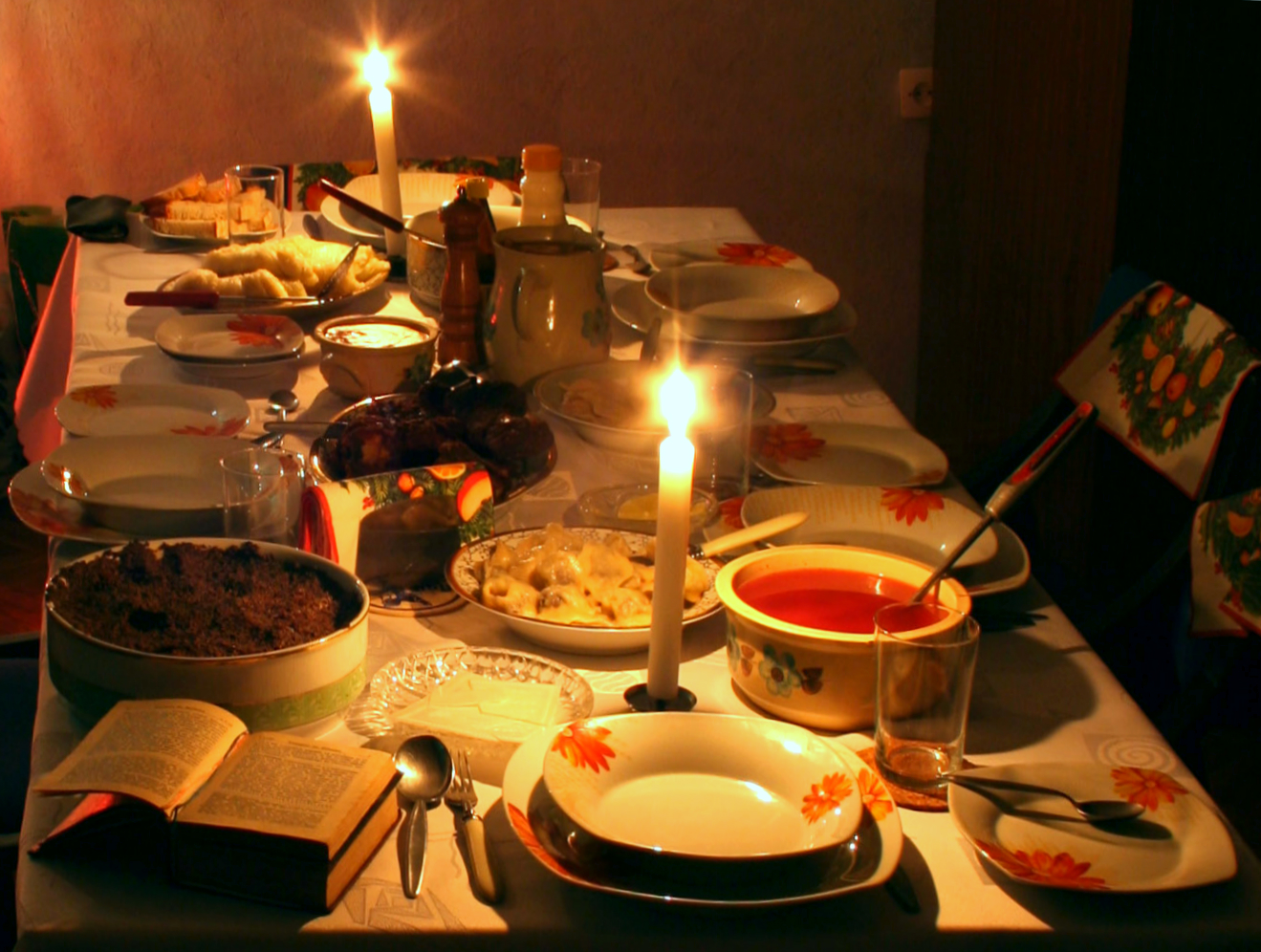
Polish Christmas is a time for family, not religion


Contrary to the stereotype, an opinion poll reveals that the festive season is a time where family and traditions take precedence over the religious nature of Christmas in Poland.

The poll by CBOS finds that only 5 percent of Poles say that religious rituals give them most joy at Christmas, whereas 71 percent say that family gatherings give them most satisfaction.

Churches do fill up at Christmas time, with midnight mass being an important part of the traditions of this time of year. But the poll shows that the stereotype of Poles as first and foremost a religious people is wide of the mark.

The poll also reveals that there is a small minority for whom Scrooge is a role model. Three percent told the pollsters that they feel no joy or satisfaction at all from the Christmas holidays. Bargh! Humbug!

Monday, December 24, 2007

Merry Christmas and the ultimate gift


One of the most heart warming stories this year has been of Polish boxing and kickboxing champ Przemyslaw Saleta donating one of his kidneys to his sick baby daughter.

It was a no brainer, I suppose. Your daughter needs a new kidney, and you have two of them.

So Saleta went into surgery last week knowing he was doing the right thing.

After the operation the daughter was doing well, though her dad rapidly went into a coma.

Fortunately the boxing champ came through and is now at home with his wife.

The case has highlighted the lack of donors in Poland, though the country has one of the lowest family refusal rates in the EU – where relatives block the removal of organs after death.


Family refusal
46% Greece
42% United Kingdom
30% France
29% Italy
21% Estonia
19% Latvia
17% Slovakia; Spain
9% Hungary; Poland
Source: European Commission; Council of Europe

So Saleta will no doubt head the campaign for Poles to carry the new ‘Euro cards’, which, when carried in your wallet or handbag, allow for organs to be removed after death without having to ask permission from grieving family.

But what better Christmas present could a dad give his daughter than a new kidney?

The story puts back my faith in humanity.

And let me wish the hundreds of thousands who have passed this way in 2007 a very, very Merry Christmas.

Sunday, December 16, 2007

Simon Mol charged with infecting 12 Polish women with HIV


Almost a year after he was first detained by police in Warsaw, the Cameroonian ‘refugee’, poet and human rights activist is finally charged by the prosecution service, and faces a long jail sentence.

Mol’s case, as it was revealed in a blaze of outrage in the Polish media in January this year, is a tabloid journo’s dream.

An African who had won refugee status and had become a well-known media figure, campaigning on human rights and race issues in Poland, was accused by numerous women in Warsaw of infecting them with HIV, while all along knowing that he was carrying the virus.

But the case is not just about whether he knew, or not, that he was HIV positive (although that is what the court, when he finally comes before a judge, will be deciding). When asked by the women to use protection before sex, he had refused, claiming that they were only asking him to wear a condom because he was ‘an African’.

When the Rzeczpospolita daily went to Cameroon and Nigeria to examine whether Mol’s claims of political persecution in those countries was true, they found that his family, friends and work colleagues knew nothing about it. It seems that Mol was an economic migrant, not a political refugee. Mol's side of the story is here.

So, in one case we have a deadly combination of sex, race and politics. If you had to write a prototype tabloid shock, horror story, then this was it.

Of course, if the prosecution can prove that Mol knew he had HIV and had deliberately infected women as some kind of political ‘revenge’ – and this has been suggested in the press coverage here – then this is a very, very nasty crime, indeed, and nobody would be too upset if they slung him in jail and threw away the key.

Simon Mol and the ‘Warsaw Salon’

Many of the women who slept with Mol seem to come from artistic, liberal circles, known here as the ‘Salon’. Mol was a poet and writer (though not a particularly good one) who was a member of many cultural societies and political organizations in Poland. He was allied to the small Green Party, but also a member of an ex-pats’ writer’s club based in Warsaw.

After I was asked to join the same writer’s club, this summer, I was talking to one of the organizers about the Mol case. The guy told a familiar tale, of feeling ‘betrayed’ by Simon. Everyone was taken in by him, and not just the 12 women infected with HIV, and the many others who were lucky enough to get away with the encounter.

I also took part in a UK documentary about the culture of Polish soccer fans, which was filmed in Warsaw and Krakow late last year. One of the other contributors was Simon Mol, who was involved in the ‘Kick Racism out of Football’ campaign. I got a slightly worried email in March, this year, from the British producers of the film, asking whether Mol’s presence in the documentary would damage its credibility. It was too early to say yes or no, as nothing has been proved in a court of law, one way or another (and we should remember that it still hasn’t). I don’t know whether they have kept Mol in the film, but if I was the documentary maker, I probably would have left him on the cutting room floor.

I met Mol a few times, and he was a convincing character. He seemed genuine. And what he talked about – the inadequate refugee services in Poland, the racism he and other Africans encountered, remains, despite the fact the Mol himself allegedly appears to have been charlatan, essentially true.

Mol has left many angry, disappointed, and sick people in his wake. What is also worrying is the damaged image of genuine African refugees in Poland. They have joined the long list of victims of the actions of Simon Mol, the man whose poetry seduced a nation.

Wednesday, December 12, 2007

Poland slips down the index


Two rankings released his week – the FDI Confidence Index, and the Migration Integration Policy Index – show Poland performing poorly.

The real shock is the FDI index – Poland has slipped from 5th to 22nd in just 12 months. India and China are the sexiest for the investor.

The consultancy that produces the report says emerging economies are the most attractive. Of ‘Eastern Europe’ it says:

While executives see opportunity in Eastern Europe's lower labor costs and proximity to Western Europe, they remain concerned about corruption and the lack of reform in the region.

The perception of Poland has taken a dive at a time of rising confidence in the region, in general. Investors think that Poland still has poor infrastructure, is conflictual with Moscow and Brussels, still corrupt and, crucially, the cost of labour is going up.

Now, the above sounds, of course, like a description of how critics see the performance of the previous PiS government.

From Poland with love

Another index, this time the Migration Integration Policy Index, produced by a Very Big Brussels Think Tank, doesn’t rank Poland too highly, either. Out of 28 European countries measured, Poland struggled in at number 21.

Oh, bugger.

Ranked on anti-discrimination initiatives, access to the labour market, etc, Poland falls down on its …migration, integration, policy.

The above are both examples of how the previous government alienated the rest of...well, Planet Earth, quite frankly. It was a bit of, what they call in the trade, A Big PR Balls Up.

Will the next government improve Poland’s battered image? Well, if the body language between Tusk and Frau Merkel was anything to go by when they met in Berlin yesterday, then things could get steamy!

But one cold shower for Tusk could be a sign of things to come. Coal miners are getting restless.

Monday, December 10, 2007

Pole sues Wikipedia for calling him ‘a troll’!


Buy perfect Christmas ‘Metka by Traczka’ present – as mentioned in Przekroj magazine - here…if you don’t my girlfriend will kill me…

Arnold Buzdygan (photo) – sometime wannabe presidential candidate, and a regular on usernet sites in Poland – went to court in Wroclaw, southwestern Poland, last week, to sue Wikpedia Polska for deformation of character.

Is the victim/litigation culture entrenching itself in Poland, as it has done in the United Kingdom? Let’s hope not.

Buzdygan claims that his fiancée’s mother refused to let the marriage go ahead because of an entry on the Polish version of Wikipedia, which, in the ‘controversies’ section, calls him ‘a troll’ for his vulgar interjections on blogs and forums. thenews.pl reports:

Buzdygan claims that calling him a “troll” is offensive. “This is a very grave offense among Internet users. Something like a paedophile elsewhere”, says Buzdygan, quoted by the tvn24.pl news portal…

“Mr. Buzdygan’s claims are ridiculous. Wikipedia is not our product, it is being created by Internet users. Basically, anyone can contribute. The administrator’s role is solely to prevent vandalism”, said a Wikipedia editor…

However, Andrzej Malicki, at the Circuit Bar Council in Wroclaw, disagrees: “Internet media should adhere to the same rules as newspapers, for instance. If offensive material is published, the editor should bear in mind the possible consequences.”

Troll? ‘Offensive material’?

Wikipedia’s own entry on the word says:

Someone who intentionally posts controversial or contrary messages in an on-line community such as an on-line discussion forum or group with the singular intention of baiting users into an argumentative response.[1] It often has a broader meaning referring to any shady trouble making Internet activity.

So, it is possible to waste precious Polish court time – and it is precious: cases can take years to get as far as court – by claiming that saying someone is a ‘troublemaker’ on the internet is 'offensive'. LOL, as troll-types say.

It is bad enough when big business use the courts to shut people’s opinions up which they don’t like, but when internet users go to the same lengths, then it is about time we called cranks like Buzdygan something worse than a ‘troll’. How about 'dickhead timewaster'?

His fiancée’s mother is a very wise woman, indeed.

Thursday, December 06, 2007

Polish guns and crime


Another teenager goes on the rampage in the US. Lucky, many say to themselves, as they shake their heads, we don’t have a gun culture in Poland like those crazy Yanks. Well, some Polish MPs want to ‘liberalize’ gun laws, using the argument that it will actually reduce crime.

In general, Europe is getting more panicky about guns. The EU parliament.com magazine reported at the end of November:

MEPs have backed plans which are expected to severely restrict the circulation of firearms that can be converted into handguns.

It means that such weapons will in future be subject to the same strict minimum EU rules which currently apply to all firearms.

Some countries, such as the UK, currently ban firearms that can be converted into handguns, but today's decision means that severe restrictions on the supply and circulation of such weapons will apply throughout the EU.

The plenary in Brussels has today also endorsed a proposal to raise the age for obtaining firearms to 18, subject to certain conditions.

Deputies voted by 588 votes for the proposals, with just 14 against, and the European commission's directive is now expected to come into force across the EU by 2010.

European legislators (although they don’t really legislate anything) are unanimous that we do not want to go down the US route with people walking around like gun slingers.

And yet, there is no correlation between gun ownership and murder rate. Spiked has a provocative article which points out that...

It may sound shocking to note that in 2004 there were 11,624 gun-related homicides in the United States. However, the overall US homicide rate (0.043 deaths per 1000 people per year) is lower than many other countries, including EU members Poland (0.056) and Bulgaria (0.045).

So maybe gun ownership actually reduces crime? Some law makers in the present Polish ruling party Civic Platform certainly think so. Political Gateway reports:

A Polish private magazine, with support from criminal law experts and some politicians, has launched a campaign to make gun licenses easier to obtain.

The Giwera (Gun) magazine, shooting clubs and fire arms fans, appealed to police to make more liberal gun possession for ordinary Poles, Polish Radio said Monday.

The idea is to make guns available to people in case they might need to defend their families and properties. However, restrictions on carrying guns in public would be upheld.

Cezary Grabarczyk, infrastructure minister, said he might support the idea. He was appointed minister Friday when a new coalition government was formed by Prime Minister Donald Tusk of the liberal pro-EU Civic Platform.

The latest police data published in June said out of Poland's 38 million population, some 23,000 people have registered fire arms.

Polish experts said laws liberalizing gun possession lessen a crime rate in a country, giving an example of the United States where a murder rate is much higher in states with restrictive laws than in states with liberal gun possession, the radio said.

Sunday, December 02, 2007

In a flap over bird flu in Poland


Turkeys on two farms near Plock, central Poland, have been detected as suffering from the H5N1 strain of avian flu.

And two in the northern Pomorze region, meat containing the potentially deadly strain of the virus have been found in shops coming from two warehouses, in Żukow and Sierakowice.

Lithuania has put a ban on poultry being imported from Poland [correction - see comment 1]. The Polish government claims that this is against EU rules.

Is it a risk to human? Well, the virus has been around at least since the early 1090s and humans have been infected since 1997. Just over 206 people have died over the years, even though millions of birds have caught the virus. Not one case has been detected of being transmitted from person to person – meaning a pandemic is unlikely with the virus in its present form (though it does mutate).

The humans that have contracted the decease usually live within close proximity of poultry – on small farms in southeast Asia, for instance.

If meat is cooked normally then it can not be transmitted that way, either.

So it will be interesting to see the newspaper’s reporting of these two cases tomorrow. Are we in for more doom and gloom headlines about a bird flu pandemic heading our way?

More panic?
See Survive the flu!
Deadly avian flue - official, the beatroot, March 2006