Showing posts with label history. Show all posts

Sunday, July 29, 2007

Warsaw Uprising 1944: 'What more could be done?'


Those were the words of leader of the British Labour Party in 1944, Clement Atlee, as Poles rose up against the Nazis during the Warsaw Rising, that began on August 1 and lasted 63 bloody days.

The answer to the question was: a lot more than the Britain did, along with many others. The imperative from the British foreign office’s point of view was – don’t upset Stalin.

Stalin, with forces on the bank of the River Vistula, was quite content to let the Nazis and Polish Home Army destroy each other – all the better for the Soviets when they did finally enter the city three months after the Uprising was defeated and the Nazis had retreated.

Many Russian historians claim that the Red Army was exhausted and had no supplies. But that doesn’t explain why Stalin had refused permission for the RAF to land anywhere near the city during the period when it was flying planes in from Italy to try and bring a few supplies to the insurgents.

But there was no real political will in Britain to do much more. Stalin had been promised by Churchill et al that Poland would be in his sphere of influence after the war ended. Warsaw was his.

Few in the British media seemed to have had problems with this. The lone voice, as Norman Davies points out in Rising 44 (see chapter here), was George Orwell. Writing in the leftwing Tribune on September 1:

I want to protest against the mean and cowardly attitude adopted by the British press towards the recent rising in Warsaw…..

...As soon as the news of the rising broke, the News Chronicle and kindred papers adopted a markedly disapproving attitude. One was left with the general impression that the Poles deserved to have their bottoms smacked for doing what all the Allied wirelesses had been urging them to do for years past, and that they would not be given and did not deserve to be given any help from outside.

...The enormous majority of left-wingers who swallow the policy put out by the News Chronicle, etc., know no more about Poland than I do. All they know is that the Russians object to the London Government and have set up a rival organization, and so far as they are concerned that settles the matter. If tomorrow Stalin were to drop the Committee of Liberation and recognize the London Government, the whole British intelligentsia would flock after him like a troop of parrots.

[A] message to English left-wing journalists and intellectuals generally: ‘Do remember that dishonesty and cowardice always have to be paid for. Don’t imagine that for years on end you can make yourself the boot-licking propagandist of the Soviet régime, or any other régime, and then suddenly return to mental decency. Once a whore, always a whore.’

Well, why don’t you speak your mind, George? Orwell was in the process of writing Animal Farm when he penned those words. It must be remembered that it was not just the leftwing press that was a ‘boot-licking propagandist’ – just about all the other journos joined the chorus of parrots.

But most of the left in Britain did remain a Stalinist ‘whore’ up until 1956. And it’s only comparatively recently that Stalin has become the moral equivalent of Hitler.

But as usual, even though he was a socialist writer, Orwell was nobody's whore.

More?

Brilliant site on the Uprising here and the Warsaw Rising Museum site here.

Friday, January 26, 2007

Revealed: Soviets had nuclear arsenal in Poland


It has long been a rumour – but now we know that the Soviets planned to make Poland a nuclear playing field.

Two daily newspapers on Friday front page documents (still marked ‘Top Secret' as late as 1990) showing that the Soviet Union had nuclear missiles placed in three sites in northwest Poland from 1970 till sometime towards the end of the 1980s.

Each fortress containing the weapons - which were under Soviet control, although to be used by the Polish army - was camouflaged by trees, giving them the appearance of small forests to any satellite photography.

Built between 1967 and 1970 at a cost to Poland of 180 million zlotys, the missiles were pointed at targets in western Europe.

In the event of a war between the West and the Soviet Union the documents, revealed by Dziennik and Gazeta Wyborcza, show that 178 missiles would be fired at Nato countries in Europe, 14 of which had the strength of 500 kilotons (the bomb dropped on Hiroshima in 1945 had the strength of only 15 kilotons).

Nuclear wasteland
The newspapers also write that the Soviet Union was seriously considering invading western Europe in the mid-1960s.

Poland would be used as the site of nuclear confrontation, leaving the country a radioactive wasteland.

General William Odom, Chief of US Military Intelligence under the Reagan administration, is quoted in Dziennik as saying:

“[Poland] became a nuclear target of Nato’s. At the moment of a Soviet invasion, Nato nuclear missiles would be aimed at central and western Poland, in an attempt to stop the march of Soviet troops."

Wednesday, December 13, 2006

Polish martial law smokes


Express Wieczorny [?] reported back in 1982…

‘A thief broke into [one of the few] cars parked outside a block of residential flats in Warsaw yesterday, and stole a cartoon of (rationed – pictured above are meat ration cards, I think) cigarettes.

But this was an honest thief, as he left on the backseat of the car, where the cigarettes had been, 51 zloty – the exact price of the cartoon of cigarettes.’

The thief was obviously out of ration coupons and desperate for a smoke!

Friday, July 14, 2006

Jacek the Ripper?


The Ripper was a Polish Jew. That was the opinion of the head of the investigation into the Whitechapel murders in 1888, according to ‘evidence’ released today.

Handwritten notes by Chief Inspector Donald Sutherland Swanson, just put in the Crime Museum at Scotland Yard, identify Aaron Kosminski as the man who butchered at least five women in the one of the most infamous unsolved cases of all time.

This is Local London reports:

‘JACK The Ripper was a Polish immigrant who died aged 54 in a Hertfordshire mental asylum - 31 years after he terrorised the dark streets of east London.

Mr Swanson wrote in the margins of the memoirs of the retired assistant commissioner Robert Anderson, "The Lighter Side of My Official Life", that the killings stopped after Kosminski realised detectives had identified him as the prime suspect.

Kosminski, who worked as a barber after arriving in London in 1882, was never interviewed because he was insane.

The only eyewitness to The Ripper murders was alleged to have identified Kosminski in an identity parade at a Metropolitan Police convalescent home in Brighton.
But Swanson wrote that the witness refused to testify against Kosminski because they were both Jewish.’

Aha! Another Jewish conspiracy theory.

Kosminski has always been identified as one of the numerous suspects of the grizzly murders. But many feel that the guy was only included in the list due to the wide spread anti-Semitism in London at the time.

But it still hasn’t stopped local journalists, apparently, from rehashing the story.

In fact many of the suspects were Polish Jews. Apart from Kosminski there were:

David Cohen (1865–1889). A Polish Jew whose incarceration at Colney Hatch asylum roughly coincided with the end of the murders.

John Pizer (1850-1897). Pizer was a Polish Jew who worked as a bootmaker in Whitechapel.

According to the great casebook.org, widespread social unrest in the East End of Victorian London led to:

‘...the belief that this “rising tide of Jewish immigration was reducing native Englishmen to destitution [and this] led to an increase in popular anti-Semitism”.

This anti-Semitism found its expression in a deliberate attempt to connect the Jews with the Whitechapel murders.'

Jack the Ripper, who ever he was (and who really cares?) was of more use as an anonymous monster than as someone who could be identified.

Much like today’s terrorists it is comforting, perhaps, to think of them as from an alien culture ‘over there’ – as a threat from outside.

Which is why it was such a horrible shock for Londoners to discover that the 7/7 bombers were not from ‘over there’ at all, but seemingly normal British Asians who played cricket at the weekends and plotted their weird trip to London on a white water rafting trip in Yorkshire.

For what it is worth, one of the most promising suspects was actually a Catholic Pole, Seweryn Antonowicz Kłosowski. A trained doctor from Warsaw medical school, he took the English alias George Chapman when he came to London from Nargornak in 1887.

He was convicted of murdering three women, including his wife. So, undoubtedly a very nasty man indeed who had all the skills to do the darstedly deeds.

But there again, Polish Catholics can make convenient folk-devils, too.

Thursday, August 11, 2005

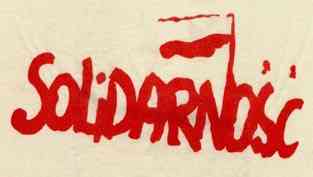
Solidarity, 25 years after


Lots of celebrations in Poland going on at the moment remembering the birth of the Solidarity trade union.

Standing by the gates of what was then called the Lenin Shipyard, Lech Welasa - the electrician who was sacked from the yard years before - triumphantly announced on that day, 1980: “We now have free and independent trade unions.”

Walesa had just signed the Gdansk Agreement with a massive pen with the face of John Paul II depicted on it. The agreement meant that, for the first time anywhere in the eastern bloc, communist authorities had formally agreed to free trade unions and freedom of speech. Alongside these concessions, Prime Minister, Mieczysław Jagielski, also guaranteed the release of all political prisoners.

Polish Euro-deputy for Civic Platform, Jacek Saryusz-Wolski, remembers the day well. He told the beatroot: “I was a Solidarity activist in Lodz at the time, setting up an inter-departmental, regional chapter of the union there. I remember feeling great joy at the news. It was simply unbelievable.”

August 31 will now be a national holiday in Poland – although this year there will be no day off work as it falls on a Sunday. Historian Wojciech Roszkowski says, “As a symbol it’s a good idea to promote the idea of solidarity in Polish society and abroad.”

Speaker of the House and presidential candidate of the ex-communist SLD, Wlodzimirz Cimoszewicz told Radio Polonia that the lessons of 25 years ago should not be forgotten. “It is in the interest of Poland and historical truth to remind the world what happened then. It was the first element in a chain of events in central Europe that had geo-political consequences which affected a whole continent.”

American historian, David Morgan thinks that what happened in Gdansk in 1980 will not be easily forgotten by anyone. “The more I study the Solidarity movement the more in awe of it I become. When you look at its discipline and its liberal goals, it’s an inspiration.”

Dancing cranes
Twenty-five years later, a whole host of events are scheduled to mark the occasion. Jean Michel Jarre will be the star of a sell-out concert at the Gdansk shipyard on August 26. He will be playing his old hits like Oxygen, of course, but has also composed a piece especially for the occasion. Lasers will blast across the night sky and the industrial cranes that are so characteristic of the yard will ‘dance’ in front of assorted heads of state, other VIPs, and 125.000 people in the audience. The show, which will cost around 1.5 million Euros to put on, will be shown live on TV and streamed on the Internet.

And in Warsaw on August 29, at Plac Teatralna in front of the National Theatre, there will be a concert featuring the songs of the period. Artists from Poland and abroad will sing the songs of the ‘Bard of Solidarity’, Jacek Kaczmarek, and many others. Huge screens in the square will show events commemorating the birth of Solidarity in Poland and around the world,

Apart from concerts, some have found other ways to mark the day. Many teenagers in Poland are not aware that Solidarity helped changed, not only Polish society, but also had an influence far beyond the nation’s borders. To fill the vacuum in these kids’ heads, Gdansk artist, Maciej Jaszynski has come up with the idea of presenting the historical events of 1980 in the form of a comic strip. Maciej says the idea was inspired by something a teacher said to him: “Teachers say that students absorb facts if they are presented in a simple and direct way. I think the Solidarity comic book does this.”

Read on:
www.solidarnosc.gov.pl describes, in six languages, the coarse of events that led to Lech Welesa signing the agreements.


This article originally appeared in the New Warsaw Express

Friday, June 24, 2005

The spy who loved it

A new biopic of a beautiful Polish spy working for British intelligence during WWII, and based on a biography written 30 years ago by an English grandmother, tells the story of a life full of courage, intrigue, love and murder.

Krystyna Skarbek was born 30 miles from Warsaw in 1915, the daughter of Count Jerzy Skarbek. She spied for the allies behind enemy lines, broke many hearts in the process - including author of the 007 novels, Ian Fleming - only to meet a grizzly end after the war at the hands of a jealous admirer.

The film – which will star Polish actress, Liliana Komorowska - is based on a relatively obscure biography written in 1975, by the English author, Madeline Masson. When I telephoned her at her home in a small village in West Sussex, England, I asked her how she felt last year when a Canadian film company rang up and told her that they were going to be paying well over 100,000 dollars for the film rights. The 92-year-old grandmother just laughed: “I was quite surprised, dear.”

“After that,” she went on, “a kind of bun fight ensued between publishers who wanted to reissue the biography.” She finally settled on the British publisher, Virago, who will be releasing a new, up-to-date version of the biography this October.

And it’s a life perfect for film. After finishing school in the 1930’s, Krystyna Skarbek decided to enter the Miss Poland beauty contest, which she won. She then met a Polish diplomat, fell in love and promptly married. When the Nazis invaded Poland the couple were living in Ethiopia. They fled to London, where Krystyna, forever looking for adventure, hooked up with the British Secret Services.

Originally posted in Budapest, she slipped into Poland to monitor Nazi troop movements. Caught by the Gestapo not once, but twice, she managed to get away both times. Her Jewish mother, though, still trapped in Poland, was caught by the Nazis and executed.

When not in Poland, Hungary, or in Egypt, Krystyna worked in France, where her fluent French enabled her to pass off as a local. Finally, in 1945, she was awarded the converted George Cross, nominated by an obviously smitten Winston Churchill.

But the pressures of being a spy during wartime affected her marriage, and, then known under the alias, Christine Grandville, she divorced in 1941. She went on to have many affairs, mostly with fellow agents.

Biographer, Madeline Masson – who has now written thirty books, and is currently writing her thirty-first - is angry at the way she thinks Krystyna has been treated by her homeland in print. “There is a scurrilous book about her in Polish, written in 1998, (Miloscnica) which dwells on her love life, but almost ignores her bravery.”

One of the lovers was always rumored to have been Ian Fleming, who at one time worked alongside her at British intelligence headquarters in England. Since the biography was written in the 1970’s, many secret wartime documents have been released, and they confirm the stories. “I am absolutely certain she had an affair with Ian, “says Madeline, who also worked for a short while in France for MI6 as a currier. “But Fleming had a wife who was pregnant, so he, quite understandably, didn’t want that talked about very much.”

In fact, he was so enraptured by Krystyna, that she became the inspiration for the double agent character in Casino Royale, Vesper Lynd.

But after the war, Krystyna found herself bored, out of a job, and her inheritance taken away by the Polish communists. Staying in England, she drifted into a number of dead-end jobs. One of these was on a cruise liner, where she met steward, George Muldowney. Krystyna liked George as a friend, but George, captivated by the vivaciousness of the Polish ex-spy, fell madly into an obsessive and jealous love.

One day, in 1952, he could stand it no longer and stabbed her to death.

I suggested to Madeline Masson that there were parallels between her and the subject of her biography. “Oh no, dear, I did get sucked into the secret service, but I always tried my best get out of it. I am not as brave as she was. And I have always been quite old fashioned, you know!”

The biography of Christine Granville will be published by Virago Press in October 2005

This article was originally published in the New Warsaw Express

Tuesday, June 21, 2005

1968 and all that

A new book by award winning American journalist, Mark Kurlansky, 1968: the year that rocked the world, unravels the connections between the revolutionary events of that year in Paris, Prague, America and Poland.

Like 1945 or 1989, 1968 is one of those years that are seen as pivotal to the history of the 20th century.

We were only one year away from the first human being walking on the moon. It was a time of civil rights and anti-war protests, of new and inventive music and sub-cultures, of scientific and social experiment. A very different time, then, from the one we live in today, characterized as it is by aversion to risk and a fear of the new.

The motor of this movement for social change were young, mostly middle class sons and daughters of the old ruling elites. It was a time when students were concentrating more of sit-ins and love-ins than they were on their studies. It was a time of hallucinogenic drugs, which my granny used to tell me made one want to jump from the top of multi-story car parks in the mistaken impression that one was an albatross.

Most people, except perhaps for the most historically challenged, will have heard of Martin Luther King, Bobby Kennedy, Abie Hoffman in the US; or in France, Henri Comte and Jean Paul Satire; or in the Czechoslovak capital, the students and Alexander Dubcek. All over the world, ruling elites had lost their legitimacy and were under pressure.

But few in the West have heard of the names associated with events in Poland of that year: Jacek Kuron, Adam Michnik…

Radical theatre
In Warsaw, it all started in March with an evening at the theatre. The Polish National Theatre decided to stage a new radical interpretation of Dziady. – which is sometimes translated in English as Forefathers’ Eve – by Poland’s most celebrated poet, Adam Mickiewicz. The play, written in the early nineteenth century, tells the story of Polish political prisoners under czarist Russia. As well as a being a political play it is also interpreted by theatre and literary critics as being a mystical, religious piece of work.

The communists had no problem with the political content, but they weren’t too keen on all the religious stuff. They saw this version of the play as being subtly subversive, and with a stupidity characteristic of the regime, decided that they were going to ban it.

On the last night of the performance, about 300 students from Warsaw University picketed outside the theatre and then marched through the center of town in protest. They were met by police and so-called workers-militia (who were basically a bunch of thugs) who beat them up and the police arrested anyone trying to get away from them.

The next day thousands of students joined in the demonstrations on the university campus, refused to go to classes, called for more freedom of expression and held sit-ins outside the Dean’s office, just as they had seen American students do on television. Before long, students from other universities had joined the struggle. All were met by the workers militias, and were beaten and arrested.

These protests had a similar character to those in Paris, or New York; mostly middle class kids from good homes, connected to parents who were part of the establishment. Another thing that the leaders of these protests had in common was that many of them were Jewish.

But in Poland, as ever, there was an extra twist.

Scapegoats
The communist party in the late sixties was divided into two factions: those who had fled Poland as the Nazis invaded, or lived in areas in the east of the country grabbed by Stalin in 1939. Many of these people were taken to the gulags, only to team up with the Soviet army as a way of freeing themselves from Stalin’s grip. Many of these, not surprisingly, were Jews. The other group, more nationalist in their outlook – the self-styled Patriots – came from communist cells within the underground movement, who fought the Nazis from within Poland.

Many of the ‘Patriots’ were anti-Semites and wanted to get rid of Jews from the party, who they accused of being ‘Zionists’. Remember, 1968 came just a year after the Israeli-Arab conflict, in which Moscow sided with the Arab states.

Jews in Poland had become communism’s scapegoats. And with many sons and daughters of Jewish members of the party taking part in the student protests, the opportunity for an anti-Jewish purge was just too tempting to be turned down.

The ‘Patriots’ organized counter-demonstrations, leading chants such as: “Zionists go back to Zion.” Unfortunately, the mob that the party had assembled were simple folk who had never even heard of Zionism. In fact, they thought that the militias were shouting, “Siamists go back to Siam”, and chanted along with gusto.

Yul Brynner would have been proud of them.

Meanwhile, the communist regime had given most of Poland’s remaining Jews one-way tickets to the West, stripping them of their passports.

Jacek Kuron, Adam Michnik and many of the other protest leaders were arrested again and thrown in jail. The demonstrations gradually ran our of steam, and a potentially dangerous ‘counter-revolutionary’ movement was snuffed out.

One of the failures of the demos in Poland, as elsewhere, was that the intellectuals failed to make connections with the workers. It was only when, in the late 1970’s, intellectuals such as Kuron connected up with workers such as Lech Welasa that the opposition movement really gained steam. And that is why the name of Solidarity was chosen for the first independent trade union in the communist bloc: it was a solidarity between workers and intellectuals – two parts of Polish society that were finally, and mutually, dependant on each other.

In the book, 1968, the year that rocked the world, American journalist, Mark Kurlansky tells this story well, and captures the spirit of adventure that was so characteristic among university students all over the world back in 1968.

Fast forward to today and look at the university students. Do you see that same idealistic, adventurist spirit? If you do, then maybe you have been ingesting some of those chemicals that make you want to jump off the roof of multi-story car parks.

Read on:

See review of 1968: the year that rocked the world

This article originally was published on the Radio Polonia web site

Friday, June 17, 2005

The Battle of Britain

It’s one year since Poland entered the EU. But the only countries where Poles could look for work without any restrictions at all were the UK and Ireland. So how have Polish job seekers got on?

One of the most successful reality-type TV shows in Poland since last May has been the intriguingly titled: Battle of Britain. The programme followed the fortunes of several young Poles who had taken the opportunity after Poland joined the EU to leave home and see if they could make a living in the UK.

Most said that they had encountered little discrimination there, and had found work in bars, restaurants, clubs or as au pairs. Many of them then lost jobs in bars, restaurants, clubs and as au pairs, only to later find other jobs in similar places.

Many of my friends in London have noticed an increase in the number of Poles living there. In fact, Londoners seem to be of the impression that all the new young workers in the pubs of London are in fact Polish. And they are half right. Fifty percent of workers who have entered Britain since the EU’s expansion have come from Poland. This is not surprising as out of the 80 million people who entered the European Union last year, 40 million of them were Poles.

So, whereas many of the bars and pubs of London used to be staffed by people from Sidney, Melbourne or Brisbane, they are now coming from Warsaw, Krakow or Gdansk.

Poles in London are the new Australians.

But Poles have also been filing posts in the professions too – most notably in dentistry. Around 200 Polish dentists, for example, are now working in the English counties of Norfolk and Suffolk, drilling and filing in British teeth for 50,000 pounds a year (that’s around 100,00 dollars). Which a large jump in salary. In Poland they get about a fifth of that amount.

And if George Orwell’s famous observation about English teeth is still correct, then they’ve got their work cut out.

The title of the Polish reality TV show I mentioned earlier, Battle of Britain, seems a strange choice. But what it is referring to is the fact that the last time a small wave of Poles hit the British coast was during the Second World War, when many of the finest pilots flying the spitfires and hurricanes in the RAF were Polish.

As newspaper reports at the time show, these dashing young Polish pilots were treated by British women as rock stars would be today.

But this positive attitude changed in the latter half of the war. The newspapers started to print negative stories about the Poles. This was mainly due to the fact that the British government was spending a lot of its energy trying to placate Stalin, who didn’t like the Polish government-in-exile in London.

But will the same happen this time? Will Brits tire of their new Polish friends?

There have been a few disturbing reports coming from loyalist, protestant areas in Northern Ireland. For instance, a group of Poles who had arrived over the Christmas period to work in a livestock stock factory in the Bushmills area of County Antrim were forced out of the area after receiving threatening phone calls from males claiming to be from loyalist groups.

And there have been other reports of attacks on Poles in these sorts of areas.

Some commentators have been trying to link these incidents with religious antagonisms between Catholics and Protestants.

But I think there is just a general breakdown in law and order in places like North Antrim. This is where some of my family are from. During the nineteen seventies and eighties – and if you exclude sectarian violence - crime was very low in places like Bushmills and other parts of NI. Working class communities basically policed themselves. If you got out of line then you could expect a visit from ‘the boys.’

But, ironically, since the Good Friday peace agreement was signed in the 1990’s, crime has risen in all areas of Northern Ireland. The tiny Muslim and Chinese populations there – around 10,000 at most, and who have lived there in peace for many years, have begun to experience attacks.

And violent crime against the indigenous population, along with housebreak-ins, and other sorts of crime, has risen as well.

So I don’t think that these attacks against Poles in Northern Ireland has anything to do with them being Polish or even being catholic. I just think they are in the right place at the wrong time.

There has also been a few strange articles in the British press about Poles. Since newspapers have found it hard to compete with the immediacy of the internet, radio and 24-hour TV news, they have all but given up writing news stories and filled more and more of their pages with opinion pieces.

One very highly paid columnist in the Times (London), Julie Burchill, wrote an article last year called, ‘Poles and Proles’. In it she stated that bringing in tens of thousands of eastern European workers to Britain, “robs those countries they leave of the young and the strong, and it robs [the working class] in the countries they go to of any pride they once had…” What chance have the British working class got, she goes on, “if east Europeans are willing to work for peanuts?”

She concludes by wondering if the only winners in this are rightwing neo-fascists like the British National Party.

Now, for a long time I have wondered if highly paid columnists like Julie Burchill are either being deliberately provocative, or are simply barking mad. I think probably the latter.

Anyway, over half the Poles that went to Britain last year have already come back. They probably got fed up with Britain’s public transport system. And the ones who have remained like it there and like the people.

Except that is for a few wackos in Bushmills, Antrim and Julie Burchill in the Times.

Read on:
For more on Ms Burchill see Sarah Anne's blog

This article was originally published on the Radio Polonia web site